
Copilot and the Future of Real Estate: How AI is Transforming Property in 2026
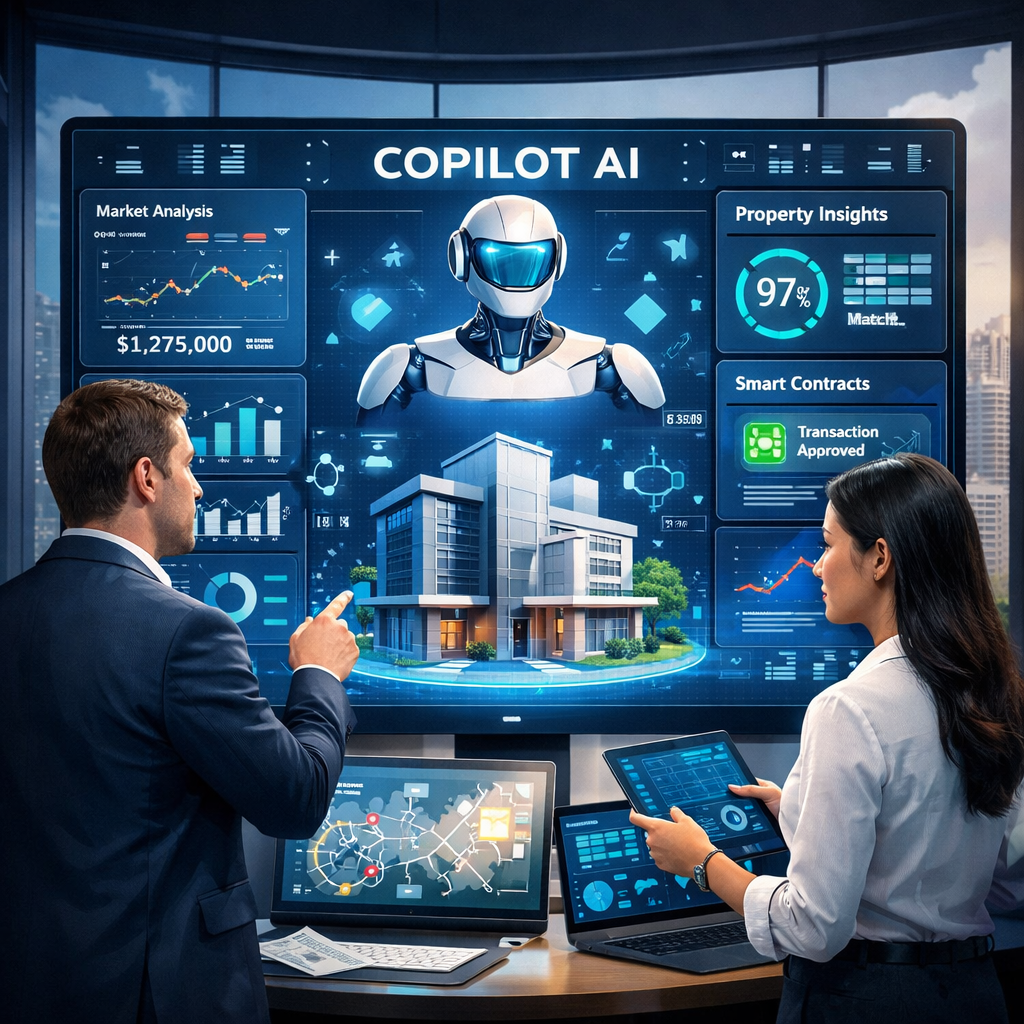
The real estate industry has always been a cornerstone of economic growth, but in 2026, it’s undergoing one of the most profound transformations in its history. Artificial intelligence (AI) is no longer a buzzword—it’s the backbone of modern PropTech. At the center of this shift is Copilot, an AI assistant that empowers real estate professionals to work smarter, faster, and more strategically. For Cybertronics, this is more than a trend; it’s an opportunity to lead the conversation on how AI is redefining property management, investment, and customer engagement.
Why AI and Copilot Matter in Real Estate
Market Growth: The AI real estate market is projected to grow from $2.9 billion in 2024 to over $41 billion by 2033.
Adoption Rates: Nearly 97% of real estate professionals now actively use AI tools, compared to widespread skepticism just a few years ago.
Performance Impact: Firms leveraging AI report up to 300% increases in lead volume and 40% higher conversion rates.
Copilot is central to this transformation because it integrates seamlessly into workflows, helping professionals translate complex data into actionable insights, automate repetitive tasks, and deliver personalized client experiences.
Trending Topics in Real Estate AI (2026)
1. AI‑Powered Property Valuation
Traditional property valuation relied on manual appraisals and comparable sales. Copilot now analyzes real‑time market data, neighborhood trends, and predictive analytics to deliver valuations that are faster and more accurate. This reduces human error and helps investors make confident decisions.
2. Automated Transactions and Smart Contracts
From deal sourcing to closing, Copilot streamlines the transaction lifecycle. Smart contracts powered by AI ensure transparency, reduce fraud, and accelerate closing times. For Cybertronics, this is a chance to highlight how automation builds trust in high‑value transactions.
3. Personalized Client Engagement
Homebuyers and investors expect tailored experiences. Copilot uses natural language processing to understand client preferences and recommend properties that match lifestyle, budget, and long‑term goals. This personalization is becoming a competitive differentiator in crowded markets.
4. Predictive Market Insights
Real estate is cyclical, but Copilot helps firms anticipate shifts before they happen. By analyzing economic indicators, demographic changes, and consumer sentiment, Copilot provides predictive insights that guide investment strategies and portfolio diversification.
5. Operational Efficiency in Property Management
AI is transforming property management by automating tenant communications, maintenance scheduling, and rent collection. Copilot reduces administrative overhead, allowing managers to focus on strategic growth rather than routine tasks.
How Cybertronics Can Lead the Conversation
Cybertronics has the opportunity to position itself as a PropTech thought leader by showcasing how Copilot integrates into real estate workflows. Here are key angles for blog storytelling:
Case Studies: Share examples of real estate firms using Copilot to boost lead generation or streamline closings.
Thought Leadership: Publish insights on how AI adoption is reshaping property investment strategies.
Educational Content: Offer guides on “How to Use Copilot for Real Estate Valuation” or “Top 5 Ways AI Improves Property Management.”
Community Engagement: Host webinars or Q&A sessions with real estate professionals exploring Copilot’s role in their daily operations.
Risks and Challenges to Address
While AI adoption is accelerating, Cybertronics should acknowledge challenges to build credibility:
Data Privacy: Clients want assurance that their personal and financial data is secure.
Bias in Algorithms: AI must be trained on diverse datasets to avoid skewed valuations or recommendations.
Human Oversight: Copilot enhances decision‑making but doesn’t replace professional judgment.
By addressing these openly, Cybertronics can position itself as a responsible innovator.
Looking Ahead: The Next Five Years
Between 2026 and 2030, AI will evolve from an assistant to a strategic partner in real estate. Expect:
Fully automated transactions with minimal human intervention.
Immersive property experiences using AI‑driven virtual reality tours.
Dynamic pricing models that adjust in real time based on demand and market conditions.
Sustainability insights, where Copilot helps firms align with green building standards and ESG goals.
Cybertronics can lead by continuously exploring these frontiers and sharing practical applications with its audience.
Conclusion
The real estate industry is at a turning point. Copilot is no longer a futuristic concept—it’s a mission‑critical tool driving efficiency, personalization, and growth. For Cybertronics, this blog is more than content; it’s a platform to inspire partners, clients, and industry leaders to embrace AI as the foundation of modern real estate. By weaving together trending topics, practical use cases, and thought leadership, Cybertronics can establish itself as the go‑to voice on how Copilot is shaping the future of property in 2026 and beyond.